
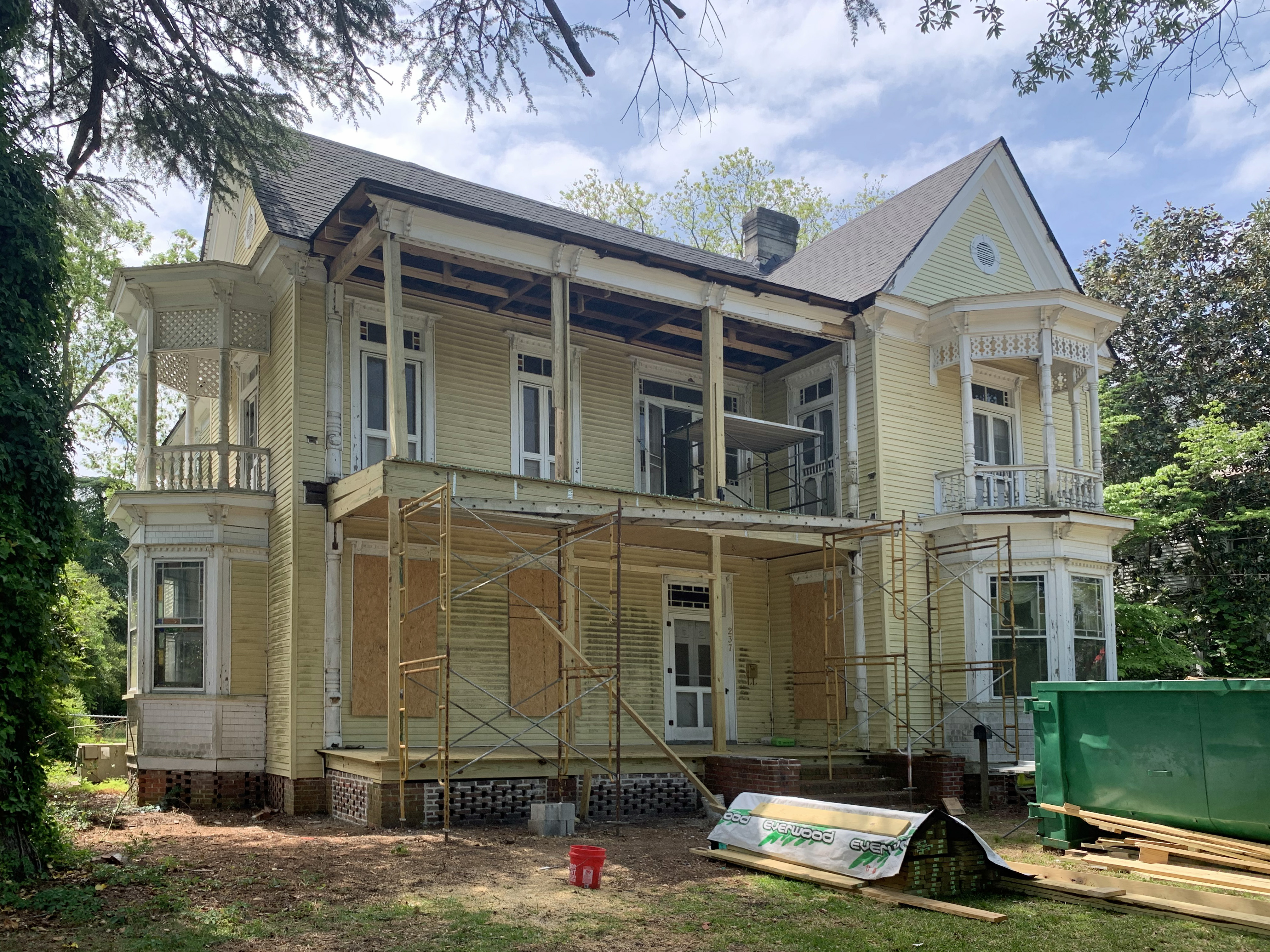

Lawrence Reese and the Legacy of the E.T. West House
By Brian E. Gandy, Darlington County Historical Commission & Museum
In the heart of Darlington, South Carolina, stands a home that quietly whispers the stories of ambition, craftsmanship, and community—the E.T. West House, built in 1890 by master builder Lawrence Shelton Reese. Its walls, like so many of Reese’s works, preserve the narrative of a county in transition at the turn of the 20th century.
A Builder of Darlington’s Identity
Born in 1864 in Marlboro County, Lawrence Reese arrived in Darlington in 1887 as a young merchant. His skills, however, quickly extended beyond trade. By the 1890s, Reese had become one of the area’s most prolific builders, responsible for many of the elegant homes and landmark structures that still define Darlington today. His firm installed woodwork in the Darlington Presbyterian Church, constructed the Stim Tobacco Warehouse, and raised residences across Broad, Jessamine, and Lee Streets.
Reese was not merely a craftsman—he was a church leader, having served as an elder in the Second Presbyterian Church. A man of many pursuits, he also operated a grocery, built caskets, ran a funeral home, rented out a horse-drawn hearse, and owned a pool hall.
The Story of Emmit Thomas West

The E.T. West House traces its beginnings to Emmit Thomas West (1849–1929), a Kentucky-born entrepreneur who settled in Charleston before moving his family to Darlington. In December 1890, West purchased a Broad Street lot from McCurdy Willis and commissioned Lawrence Reese to build his home.
West’s life was as eventful as his house. A survivor of the 1886 Santee Train Wreck, he later invested in Darlington’s growing business community. By Christmas of 1890, his family had moved into the new residence on Broad Street—a house that would remain in the West family for nearly two decades.
A House Through Time

The property exchanged hands many times over the next century, weaving its way through Darlington’s families and stories. From the Welling and Kirven families to the Hopes and Harrisons, each generation left its imprint. Among the curiosities of its history:
- Lurline Welling McCullough, an early owner, was named after a passenger steamer that once docked in Charleston Harbor.
- The youngest daughter of John K. Kirven, another owner, was named Emmie in honor of Emmit West.
- The house’s connections tied Darlington to Charleston through family and business networks, reflecting South Carolina’s interwoven cultural fabric.

Reese’s Architectural Legacy
The West House is only one among dozens of homes built by Reese across Darlington and neighboring communities. From the Marion Bonnoitt House to the John K. Kirven House, his work reflected both craftsmanship and vision. His buildings housed merchants, physicians, farmers, and entrepreneurs—individuals whose lives shaped the region’s economy and culture.
Preserving More Than Walls
The West House stands as a reminder that history is lived not only in courthouses and churches but also in the homes where families gathered, meals were shared, and traditions passed on. Today, it represents the spirit of two men—Reese the builder and West the entrepreneur—whose ambitions mirrored Darlington’s own growth in the late 19th century.
Preserving the Past: A Community Event
On August 21, 2025, the Darlington County Historical Commission & Museum, in partnership with Preservation South Carolina and the Grand Old Post Office, hosted a special celebration to honor Reese’s craftsmanship and the enduring significance of the E.T. West House.
The program included:
- Words of Welcome by Louis Venters, Preservation SC Board Member
- Remarks on Preservation by John Hildreth, Preservation SC Chairman, and Bill Segars, contractor and DCHC&M board member
- A Lecture on Lawrence Reese & the E.T. West House by County Historian Brian Gandy
- Expressions of Gratitude by Todd Hardee of Kistler Hardee Funeral Home
- A Culinary Journey led by Chef Chip Purvis of South of Pearl, who presented “Tasting the Turn of the Century”
- Closing Remarks by Joanna Rothell, Director of Outreach & Preservation for Preservation SC
Following the program, guests were invited to tour the E.T. West House at 237 W. Broad Street, experiencing firsthand the beauty of this Queen Anne Victorian home.

A Taste of History
he evening featured a menu inspired by the foodways of Reese’s era:
- Darlington County Pine Bark Fish Stew – a communal stew of fresh fish, salted pork, and onions, once a staple of the Pee Dee.
- Carolina Plantation Aromatic Rice – grown along the Great Pee Dee River, offering the distinct flavor of the colonial South.
- Bread Pudding with Jimmy Red Bourbon Sauce – a nod to heritage grains and flavors of Graham, cinnamon, and maple.
These recipes, drawn from the Darlington Cookbook of the early 1900s and later reprinted in the Pee Dee Pepper Pot cookbook, connected guests not just to the house but to the era in which it was built.
Carrying the Legacy Forward
The preservation of the E.T. West House is more than the rescue of a building—it is the safeguarding of Darlington’s cultural memory. As Preservation South Carolina continues its vital work, and as the Darlington County Historical Commission & Museum keeps telling these stories, the Reese and West legacies remain alive—not just in architecture, but in community spirit.
The Darlington County Historical Commission & Museum remains committed to preserving the stories behind homes like the West House—stories that remind us that history lives not only in records but also in the wood, stone, and traditions of our community.
